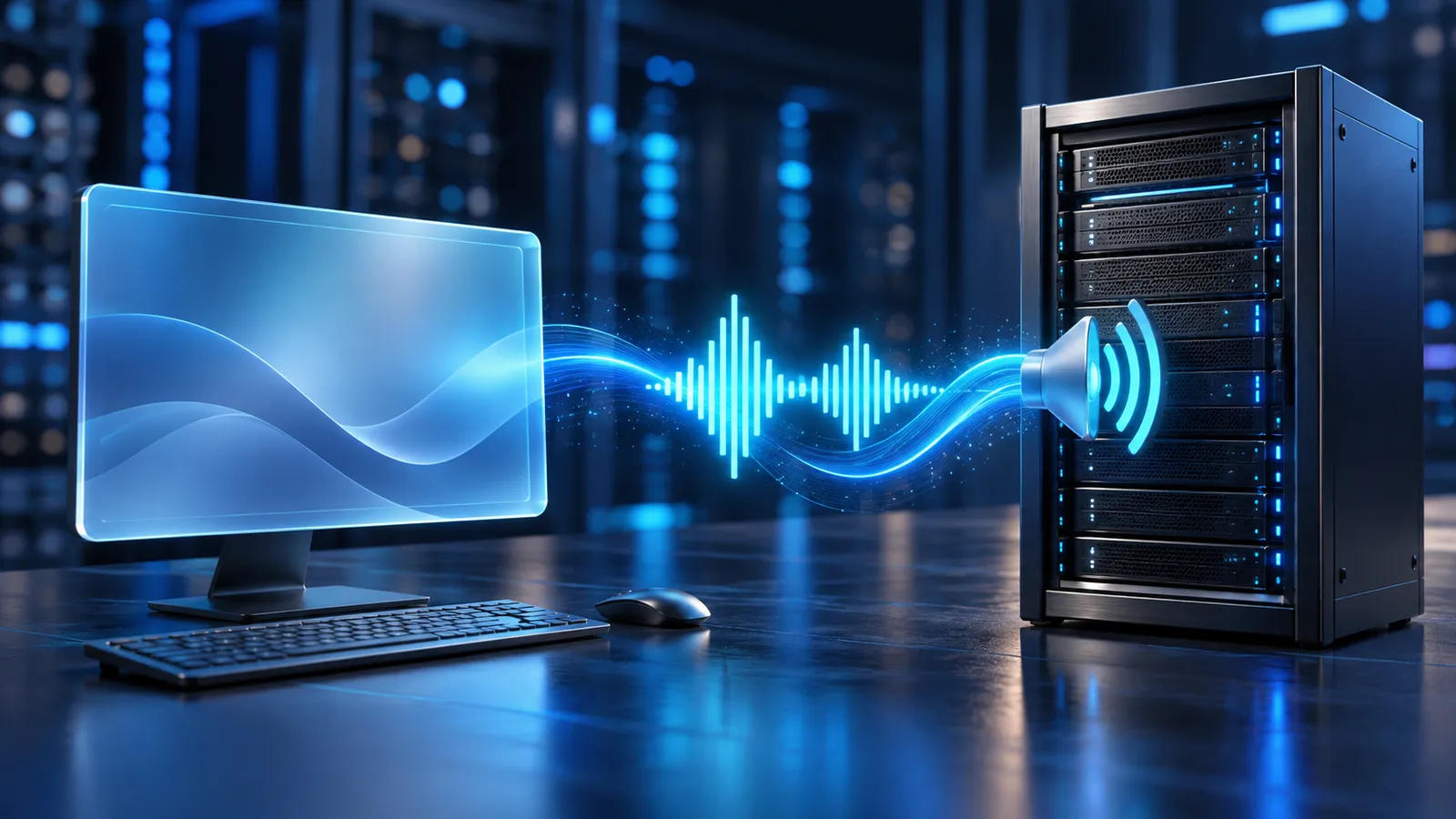
To enable audio on Windows Server 2022, configure RDP to redirect playback to your computer and make sure the server’s audio services allow it. The setup takes about five to ten minutes and lets you hear applications running inside the remote session through your local speakers or headphones.
Prerequisites
- A VPS running Windows Server 2022 Standard or Datacenter with the latest available updates.
- An active Remote Desktop connection and a local Windows PC with working speakers or headphones.
- A local administrator account on the server, because service and Group Policy changes require elevation.
- No special RAM, disk space, or audio hardware is required on the VPS; playback is redirected through the RDP session.
- If you need a Windows server with administrator access, see VPSLake Windows RDP hosting.
Step 1: Turn on playback in the RDP client
The RDP client chooses whether remote sound is sent to your computer, so set this before creating a new session.
On your local Windows computer, press Windows key + R, enter the following, and select OK:
mstsc.exeIn Remote Desktop Connection, select Show Options, then open Local Resources. Under Remote audio, select Settings and set Remote Audio Playback to Play on this computer. Unless you also need to use your local microphone inside the server, leave Remote Audio Recording set to Do not record.
Select OK, connect to the server, and sign in. If an RDP window is already open, disconnect from it completely rather than merely minimizing it; the audio choice is negotiated when the session starts.
Microsoft describes these per-connection controls in its Remote Desktop clients FAQ.
Step 2: Start the Windows audio services
Windows Audio and Windows Audio Endpoint Builder must be available before the remote session can expose a playback endpoint.
Inside the server, open Start, search for PowerShell, right-click it, and choose Run as administrator. Check both services first:
Get-Service -Name Audiosrv,AudioEndpointBuilder | Select-Object Name,Status,StartTypeExpected output is similar to this:
Name                 Status  StartType
----                 ------  ---------
Audiosrv             Running Automatic
AudioEndpointBuilder Running Automatic
If either service is stopped or has a different startup mode, run these commands in the same elevated window:
Set-Service -Name AudioEndpointBuilder -StartupType Automatic
Set-Service -Name Audiosrv -StartupType Automatic
Start-Service -Name AudioEndpointBuilder
Start-Service -Name Audiosrv
The Endpoint Builder should start before Windows Audio. If you prefer the graphical method, press Windows key + R, run services.msc, and set Windows Audio Endpoint Builder and Windows Audio to Startup type: Automatic. Start a stopped service with Right-click → Start, then select Apply → OK.
Step 3: Allow audio redirection in Group Policy
The RDP client setting cannot enable audio if a server policy explicitly blocks audio and video playback redirection.
On the Windows Server 2022 VPS, press Windows key + R, enter the following, and select OK:
gpedit.mscNavigate to Computer Configuration → Administrative Templates → Windows Components → Remote Desktop Services → Remote Desktop Session Host → Device and Resource Redirection. Open Allow audio and video playback redirection, select Enabled (or Not Configured when no policy needs to enforce the setting), and choose Apply → OK.
Apply the local policy from an elevated PowerShell window:
gpupdate /forceExpected output includes:
Updating policy...
Computer Policy update has completed successfully.
User Policy update has completed successfully.
If you changed the policy, save your work and select Start → Power → Restart. A restart makes the session-host policy unambiguous. After the VPS comes back, reconnect with the client setting from Step 1. Microsoft documents this policy under Allow audio and video playback redirection.
Step 4: Select the redirected playback device
The server must send sound to the RDP-created endpoint instead of a missing physical speaker.
After reconnecting, press Windows key + R inside the server and run:
mmsys.cplOn the Playback tab, select Remote Audio or Speakers (Remote Audio). Select Set Default if another device is selected, then open Properties → Levels and confirm the speaker is not muted. Use the Test button on the Playback tab to produce a short test tone.
If the device is present, close the Sound window and test the application you actually need. Some applications cache their output device, so close and reopen that application after changing the default playback device.
Verify audio over RDP
Verification must happen in a fresh RDP session; checking the service alone does not prove that redirection reached your computer.
- Sign out of the server with Start → account picture → Sign out, then start a new RDP connection with Remote audio playback → Play on this computer.
- On the server, run
mmsys.cpl, choose Remote Audio on the Playback tab, and select Test. - Confirm the test tone comes from the speakers or headphones selected on your local computer, not from a server-side device.
- If the tone works, open the target application and check its own volume control and output-device setting.
You can also confirm that the server services remained available:
Get-Service -Name Audiosrv,AudioEndpointBuilder | Format-Table Name,Status,StartTypeSuccessful output shows both services with Running status and Automatic startup.
Troubleshooting
No Remote Audio device appears
The local client may be set to play audio on the remote computer, or the server policy may still block playback redirection. Reopen mstsc.exe, choose Show Options → Local Resources → Remote audio → Settings, select Play on this computer, confirm Step 3, then sign out and create a new session.
Windows Audio will not start
Windows Audio depends on Windows Audio Endpoint Builder. Check the dependency first with Get-Service -Name AudioEndpointBuilder; start Endpoint Builder, then start Audiosrv. If the service stops again, open Event Viewer → Windows Logs → System and inspect entries from Service Control Manager before changing other services.
The test tone works, but an application is silent
The application may be muted in the Windows volume mixer or may be using a different output device. Open Settings → System → Sound → Volume mixer, raise that application’s volume, select Remote Audio as its output, and restart the application so it rereads the device list.
Group Policy returns to Disabled
A domain policy, security baseline, or hosting management policy can override a local setting. Run the following as an administrator and look for a policy that defines the audio-redirection setting:
gpresult /h "$env:TEMP\rdp-policy.html"Open the generated report and ask the domain or platform administrator to allow audio and video playback redirection. Repeatedly editing the local policy will not defeat a higher-priority domain policy.
Hardening and usage notes
- Audio redirection uses the existing RDP connection; enabling it does not require opening a new firewall port.
- Keep Remote Audio Recording disabled unless microphone input is necessary, because playback and recording are separate redirection permissions.
- Sign out when finished with an audio application. Closing the RDP window can leave the session disconnected and may not release the application cleanly.
FAQ
Does Windows Server 2022 need a physical sound card?
No. RDP can create a Remote Audio playback endpoint for the session, so a VPS does not need a physical speaker or sound card. The local computer still needs a working output device to hear the redirected sound.
Can I hear sound on both the server and my local computer?
The standard Play on this computer choice redirects the session’s playback to the RDP client. If an application must use a server-side audio device instead, select Play on remote computer in the RDP client’s Remote audio settings; that is a different output path.
How do I redirect my microphone to Windows Server 2022?
In the local RDP client, open Local Resources → Remote audio → Settings and choose an option under Remote Audio Recording. The server’s policy can separately deny recording redirection, so microphone access may require an administrator to allow it.
Why does audio stop after I reconnect?
The RDP client applies audio redirection when it creates the session. Sign out completely, verify Play on this computer, and start a new session; simply closing or minimizing the old RDP window can leave its original redirection state in place.